
One of the most intriguing legends surrounding Gondhla Fort tells of the extraordinary craftsmanship behind this towering Himalayan castle.
The fort is traditionally dated to around 1700 AD, and official Himachal sources attribute its construction to Raja Man Singh of Kullu, who strengthened his relationship with the Gondhla Thakur family through marriage.
But local folklore adds a darker twist.
It is said that after the magnificent fort was completed, the ruler was so impressed—and perhaps so protective of this architectural marvel—that the master mason who built it was killed, or according to another version, had his hands cut off, so that he could never create another fort of equal magnificence for a rival ruler. This tale appears in historical accounts of Lahaul as one of the legends woven around Gondhla Castle.
Whether fact or folklore, the story reflects the awe that Gondhla Fort inspired among generations of people.
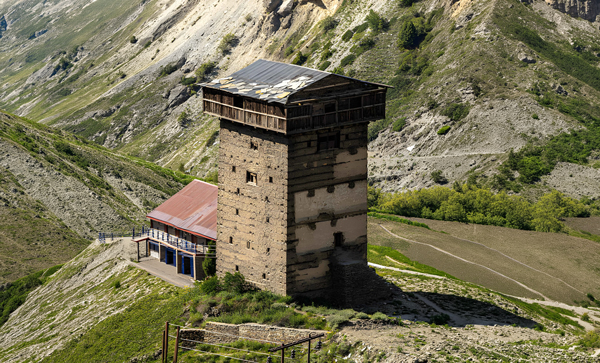
Built in the traditional Kath-Kuni style, with alternating layers of timber and stone, the fortress rises dramatically above the Chandra Valley. Its wooden staircases, carved windows, prayer chambers and old relics make it feel less like a monument and more like a living memory of medieval Lahaul.
“Some places are photographed. Some are explored. And some are listened to—because their stones still whisper stories.”
Gondhla is one of those places.
Come for the mountains, stay for the legends.